Game GUI Design
Def Jam Rapstar
Creative direction and interface design for Def Jam Rapstar, the rap karaoke game published by Konami and developed by 4mm Games.
Services
- Client
- 4mm Games
- Publisher
- Konami
- Released
- 2010 on PS3, Xbox 360 and Wii
- Scope
- Creative direction, game GUI, environment design
Overview
Rap karaoke, built for the stage
Def Jam Rapstar launched in October 2010 as a rap karaoke game for PlayStation 3, Xbox 360 and Wii. Players rapped over licensed tracks and were scored on timing, lyric accuracy and pitch. They could also record themselves with a console camera and share the video with an online community.
4mm Games brought us in to creatively direct and design the interface for that world: the menus, track select, in-game performance screens, result cards and stages. Our goal was to make the interface feel like the venue itself, with the artist as the headliner and the player as the next act.
The game
Three ways to take the mic
Career mode takes a solo performer from street level to superstar. Party and Battle modes put two players head to head. Freestyle lets you improvise over radio-ready instrumentals. The launch library had around 45 tracks, all radio edits, with names like Kanye West, Lil Wayne and Snoop Dogg among the artists.
Main menu
Gold, glass and light
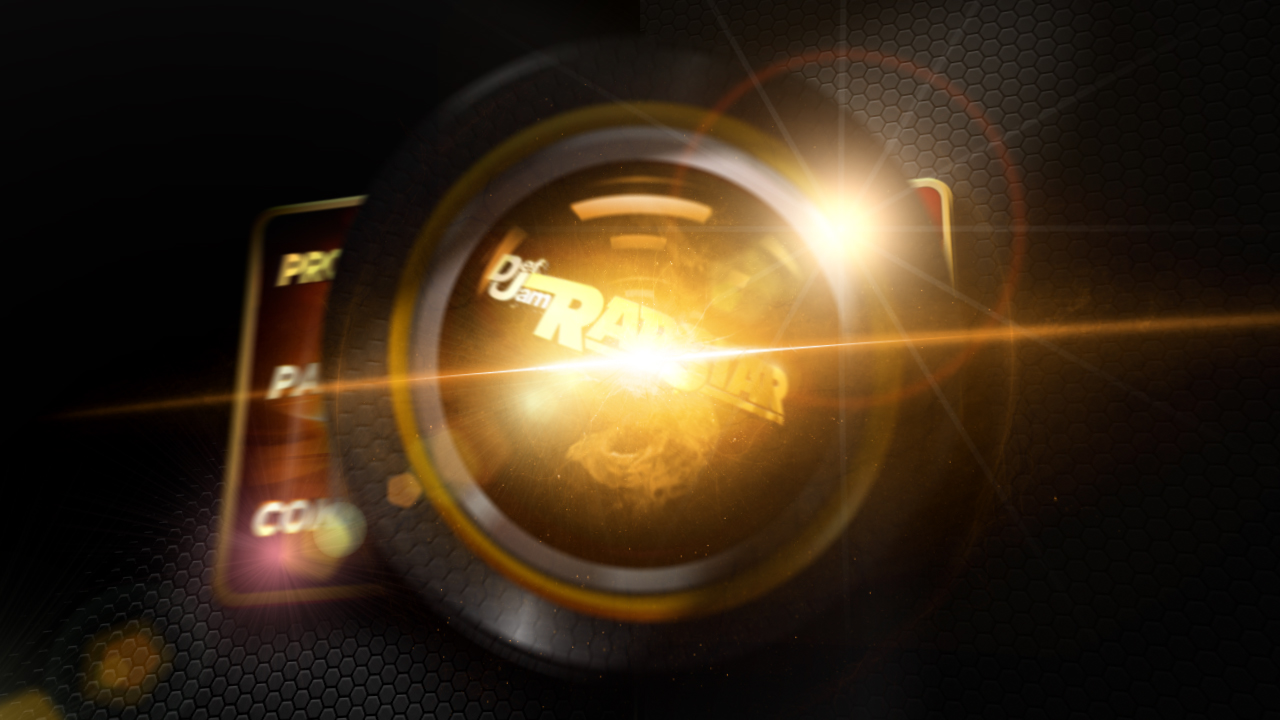
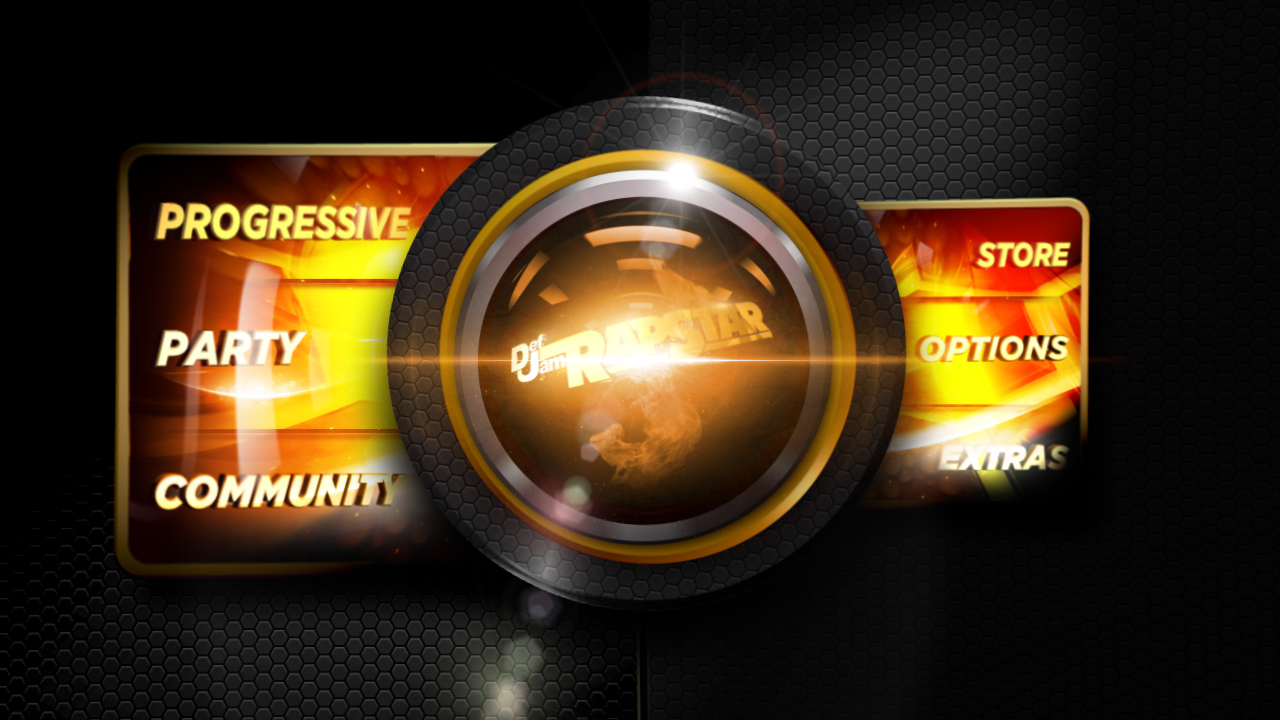
The first screen sets the temperature. A brass ring sits at the center of the menu, with Play, My Media, Community, Store, Options and Extras set in dimensional gold type around it. Lens flares and light streaks keep everything moving, even when the player is standing still.




Party mode
The artist is the headliner
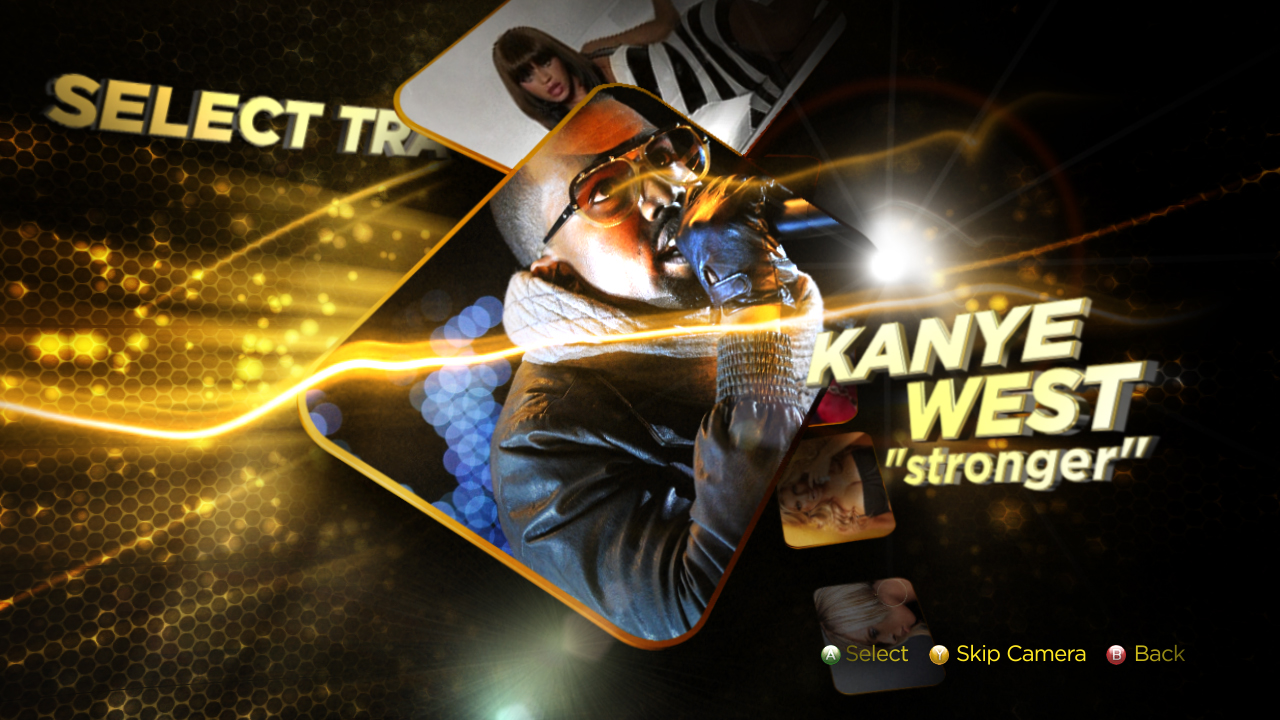
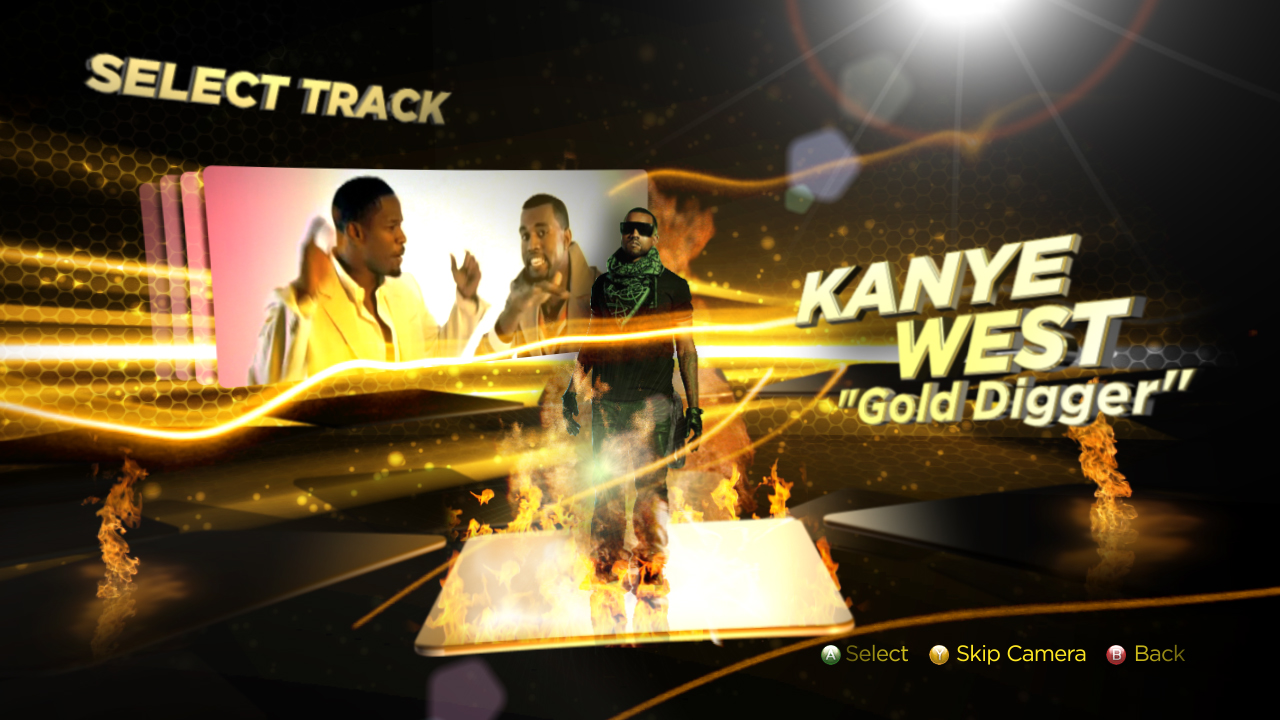
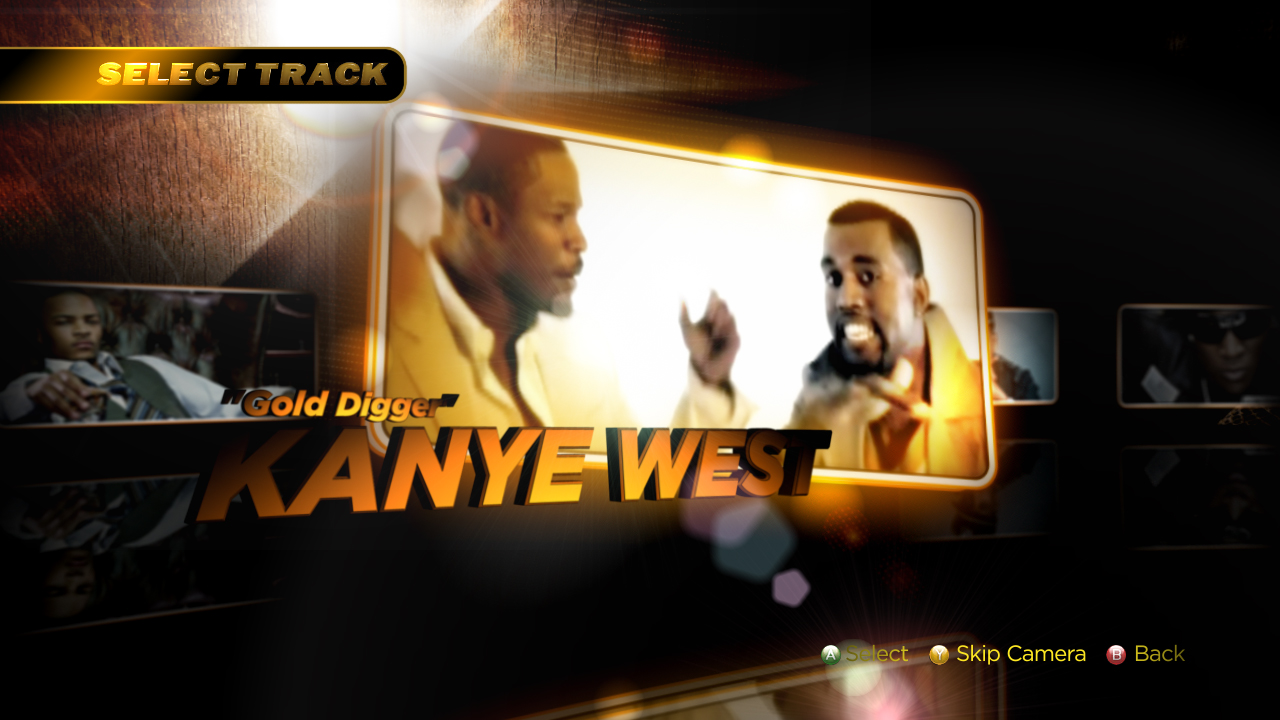
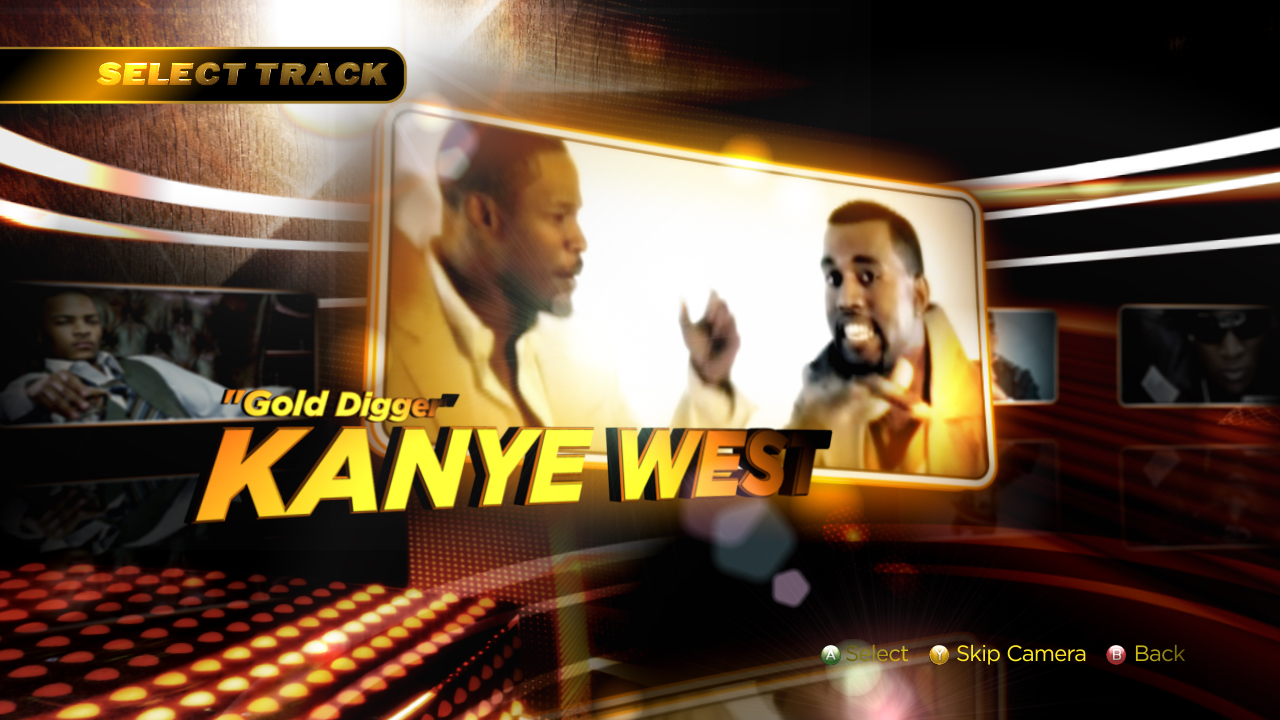
Track select treats every song like a billing. Artist portraits and video windows are framed like a broadcast, the title lettering is set large in gold, and the interface stays out of the way so the music leads.

In game
Built to be read at a glance
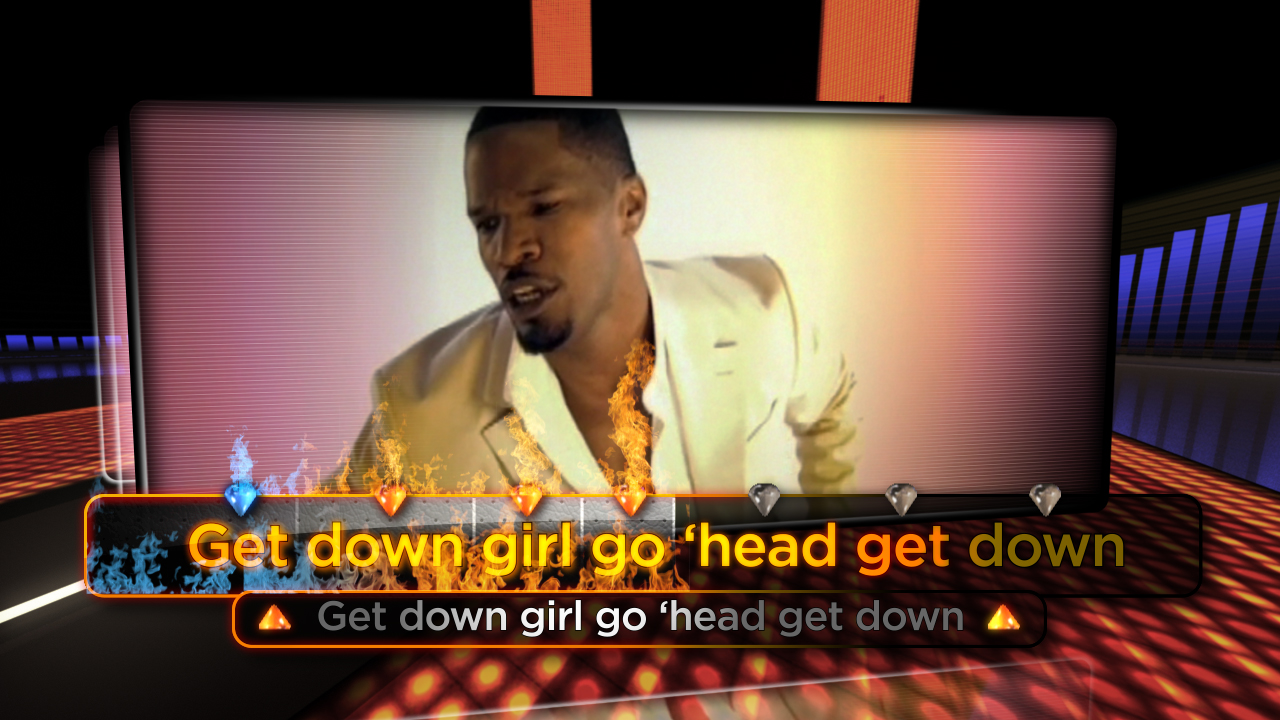
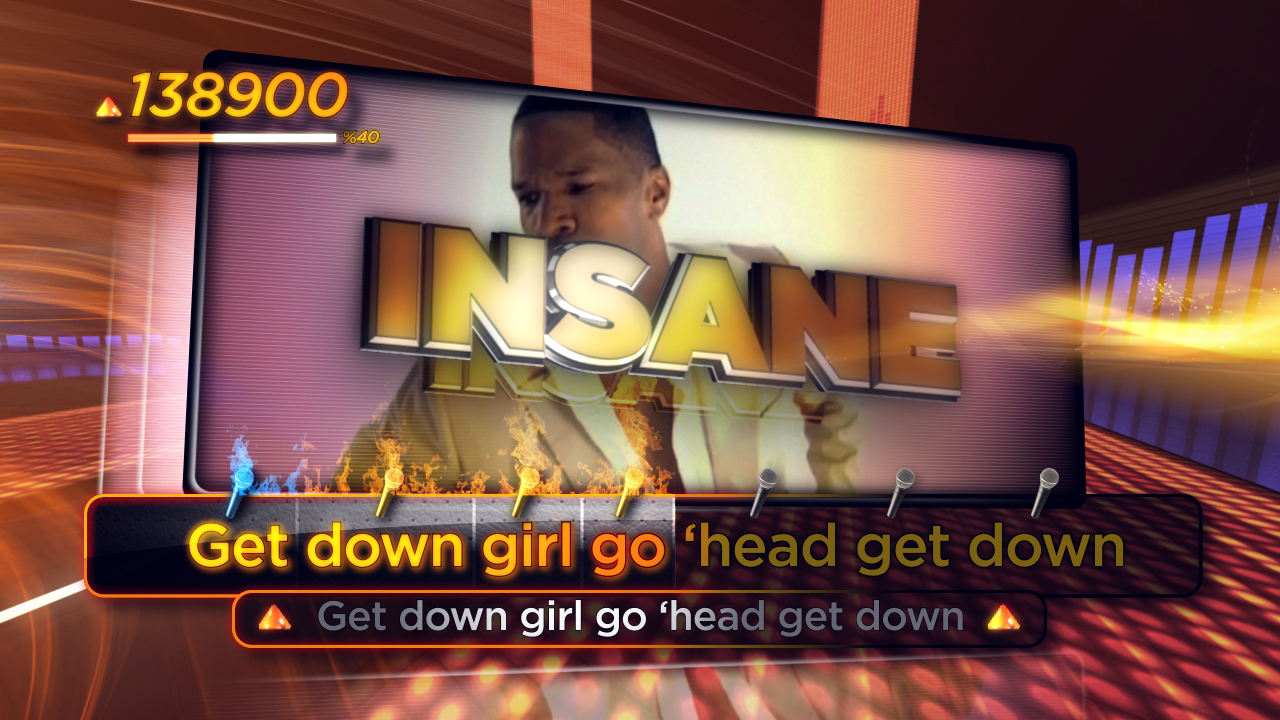
During a performance nothing can compete with the performer. The lyric bar sits low and clear, the live score stays in the corner, and a flame streak builds as the player holds the beat.
Results
A scoreboard worth screenshotting
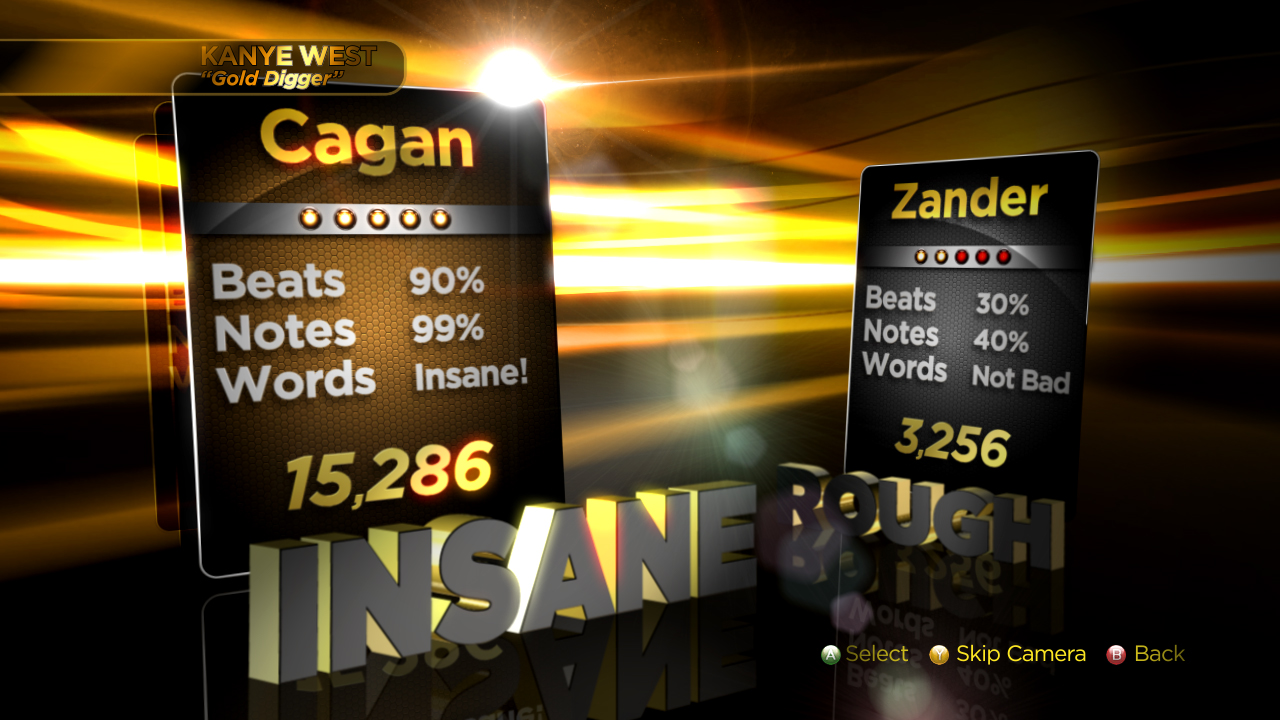
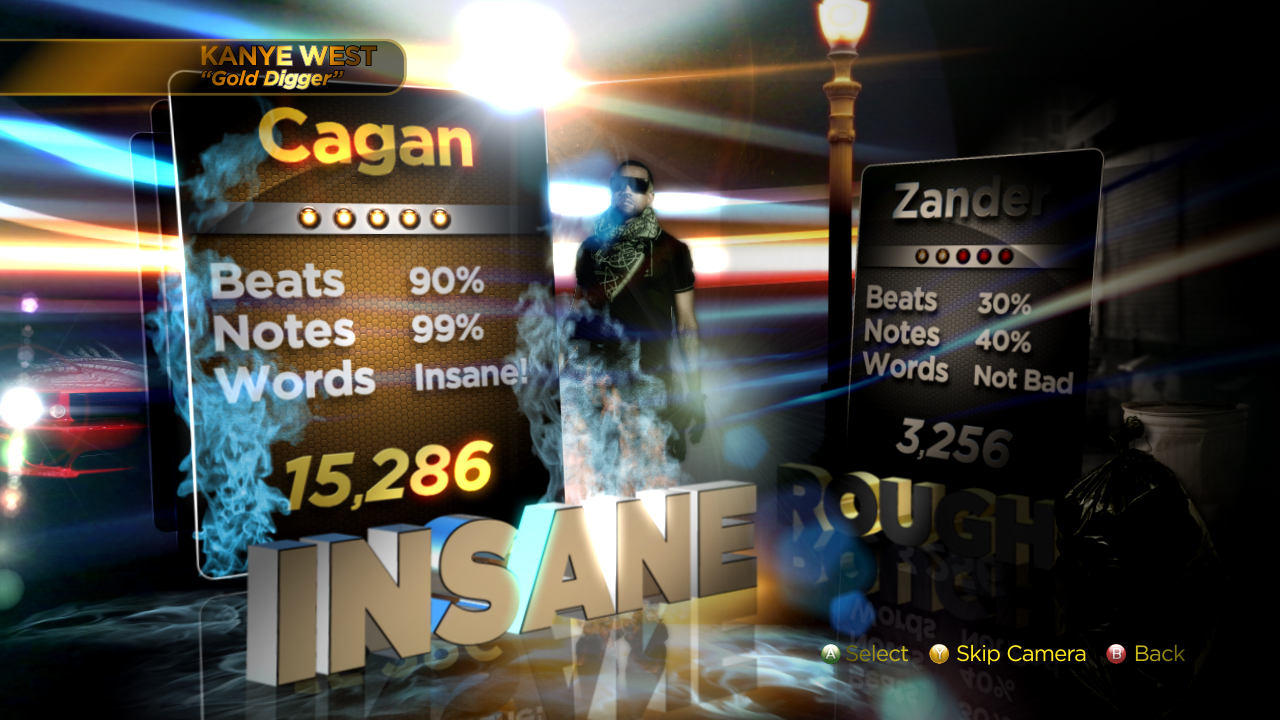
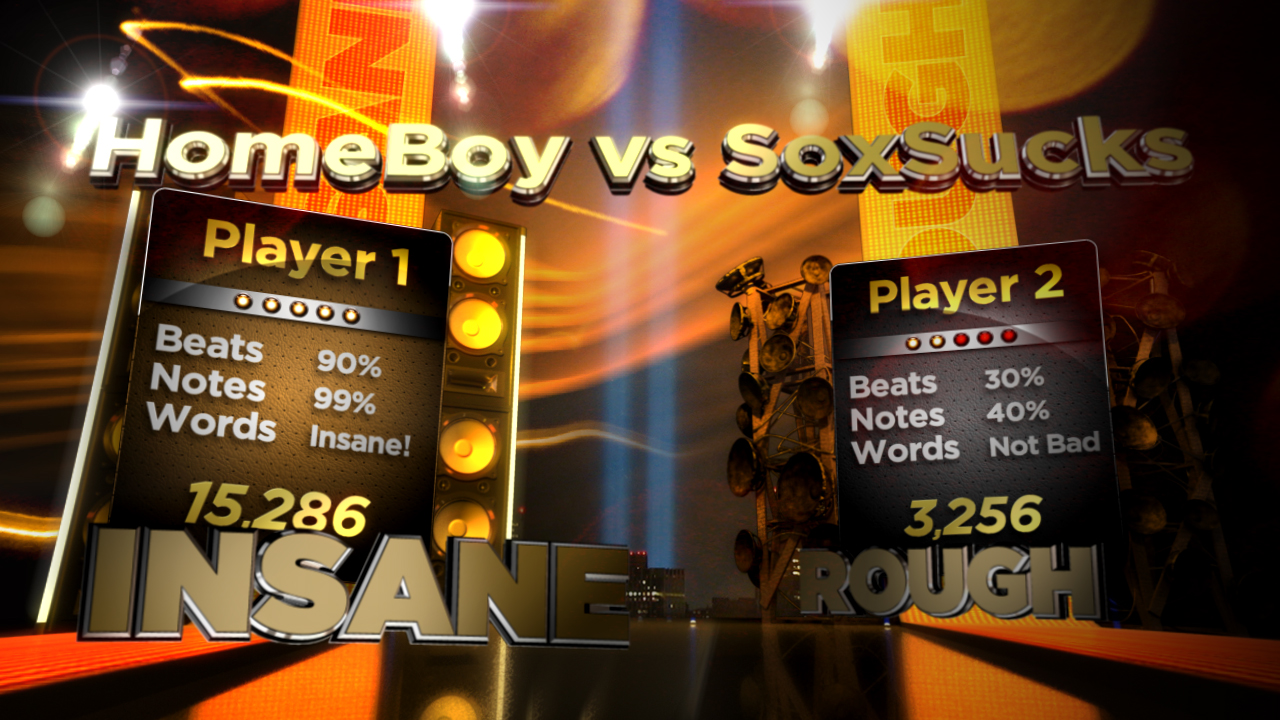
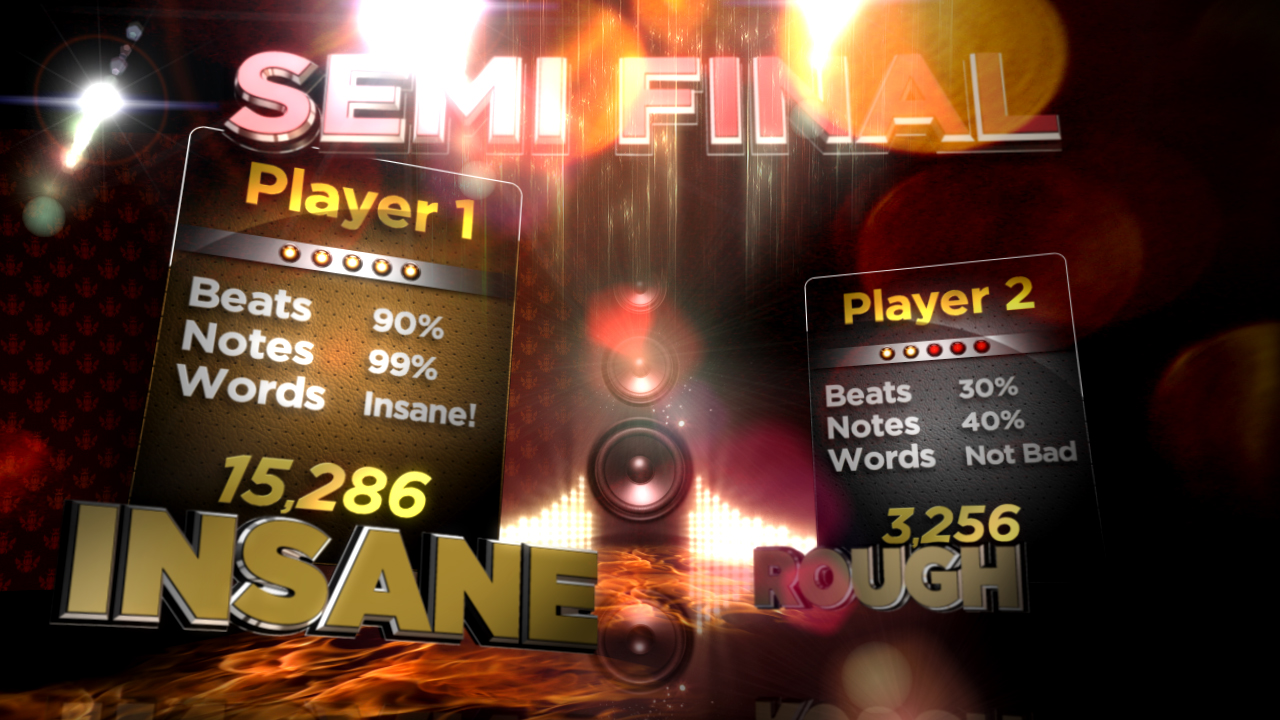
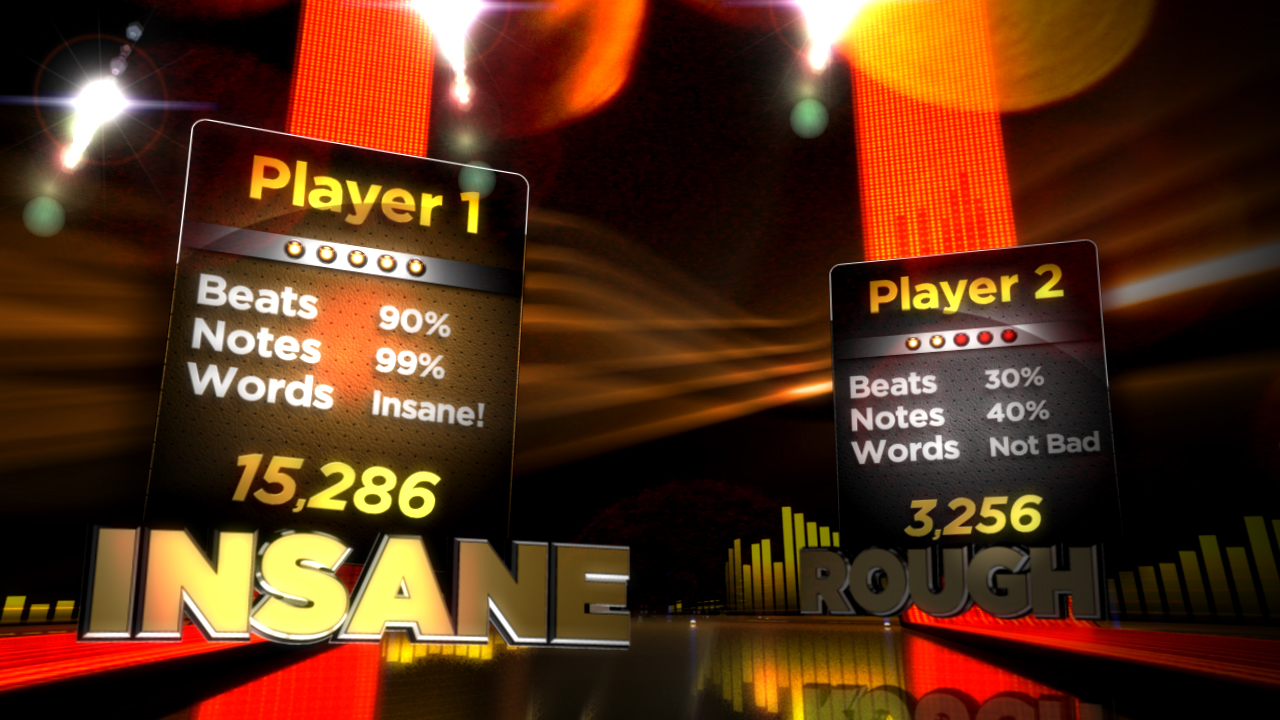
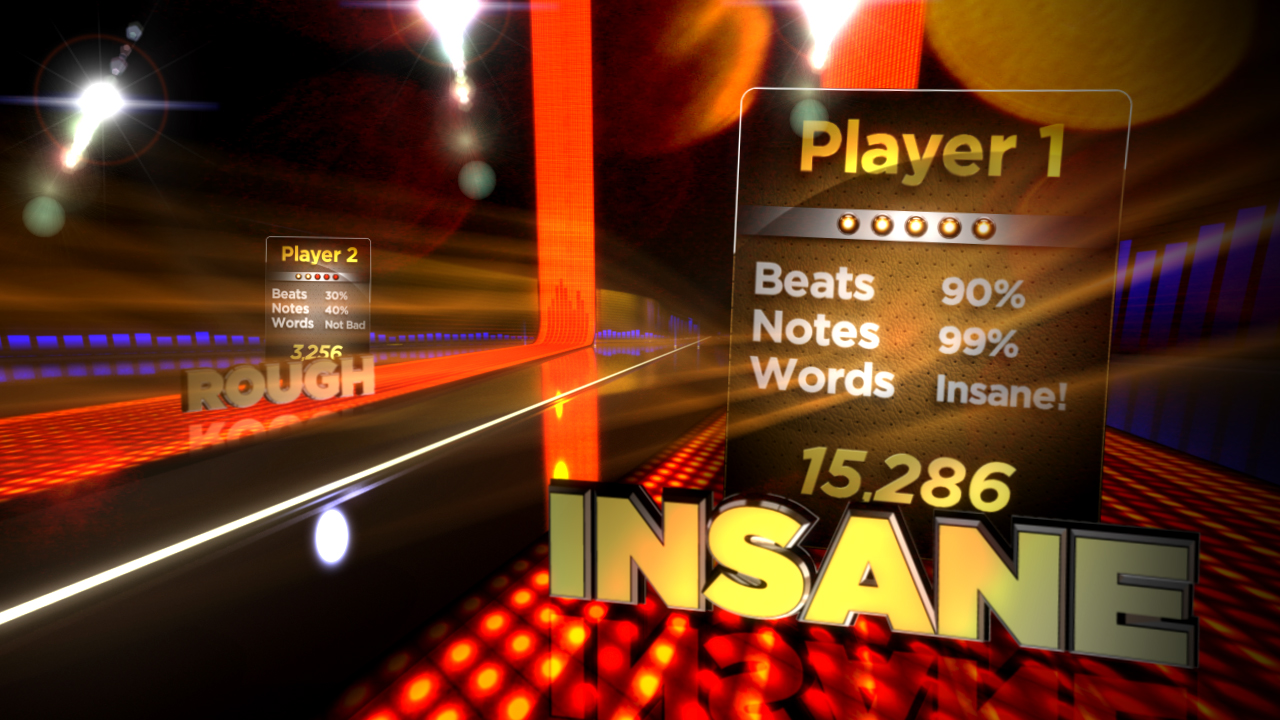
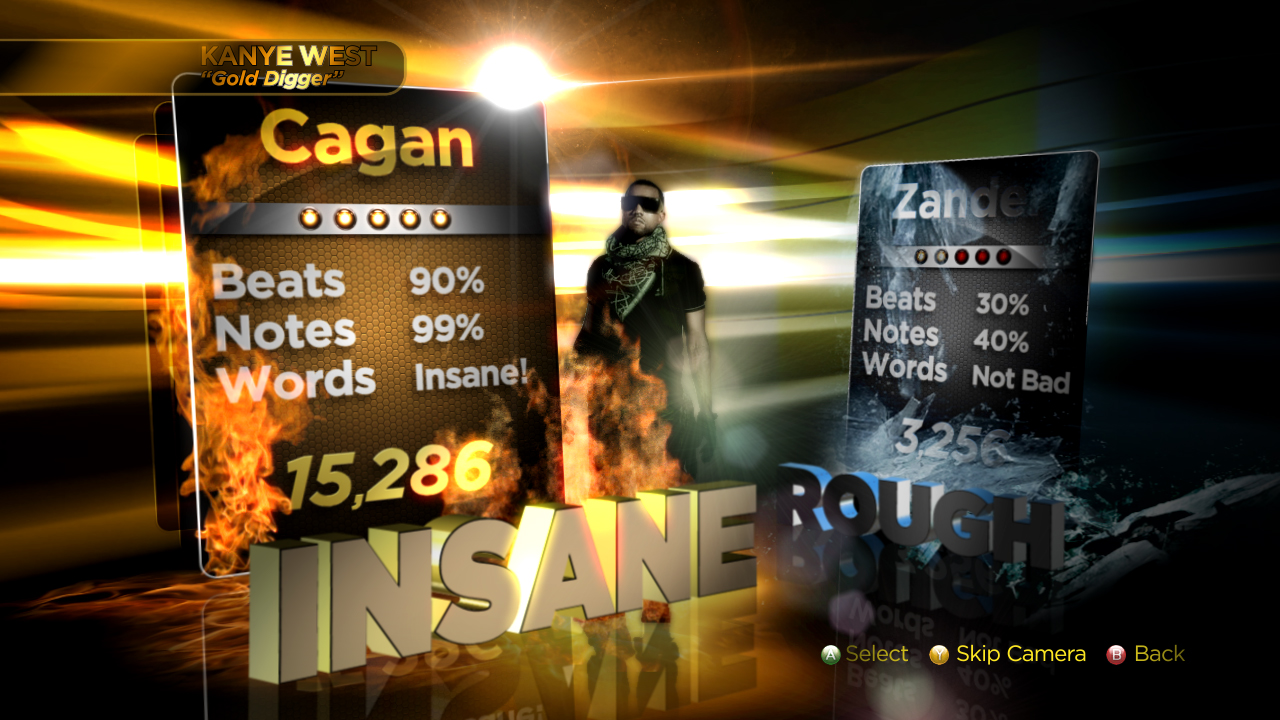
Every performance ends on a result card. Beats, Notes and Words are broken out for each player, a bold rating word lands as the headline, and battle brackets like the Semi Final carry the competition forward. The cards are built to be compared, shared and argued about.
Stages
Every track gets a room
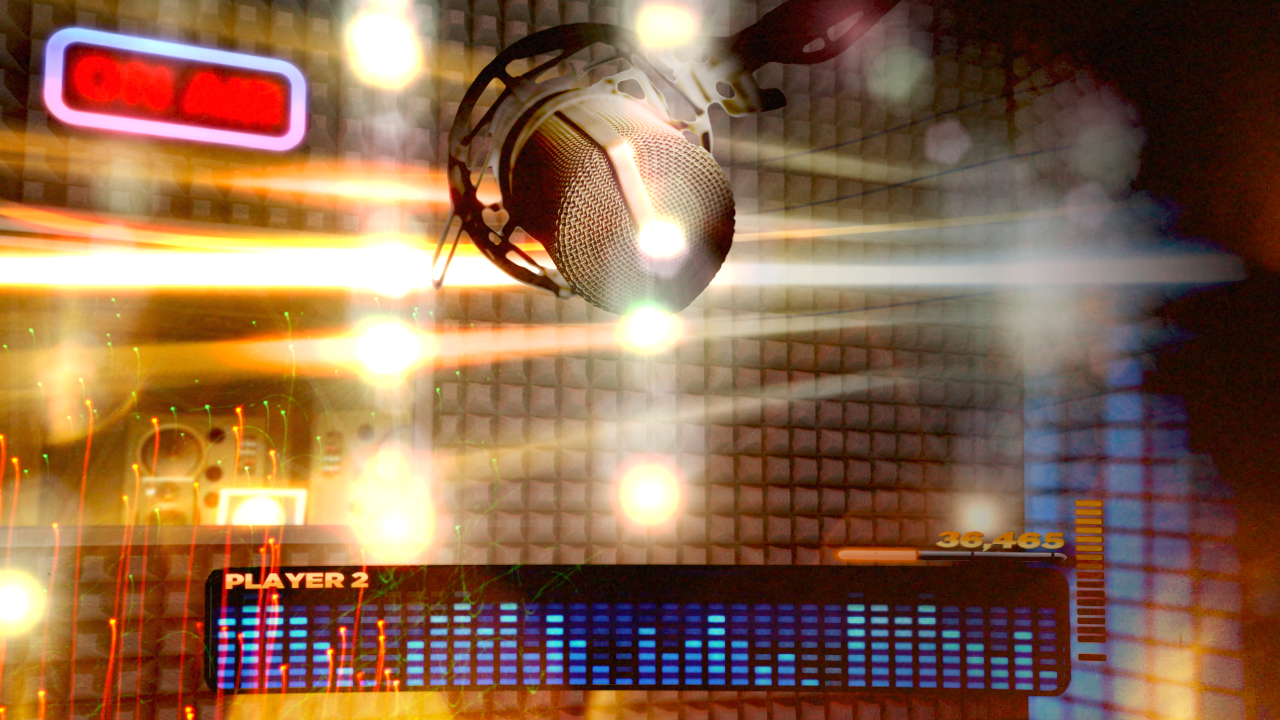
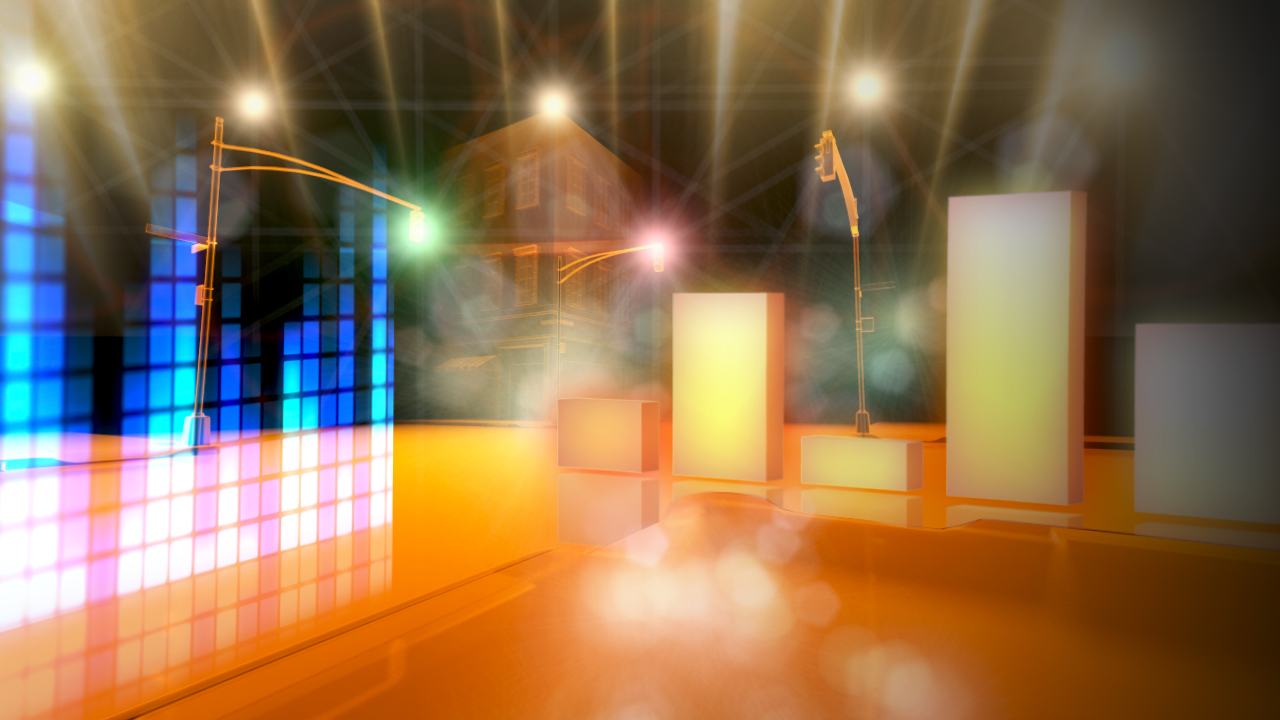
Behind the interface sit the stages: a crowd under a vintage microphone, equalizer walls, studio dials and street lights on a city night. Warm light and depth keep each environment distinct while the whole set holds one gold palette.






The result
One world, from the first menu to the last score
Across every screen the interface speaks one language: heat, brass, motion and a stage for the player. The game launched on three platforms in 2010, and it was a pleasure to shape how it looked and felt.
Have a project in mind?
Tell us about the game, product or experience you want to bring to life.
Start a project
Austin Robotics Expo 2028
Digital Podium Festival